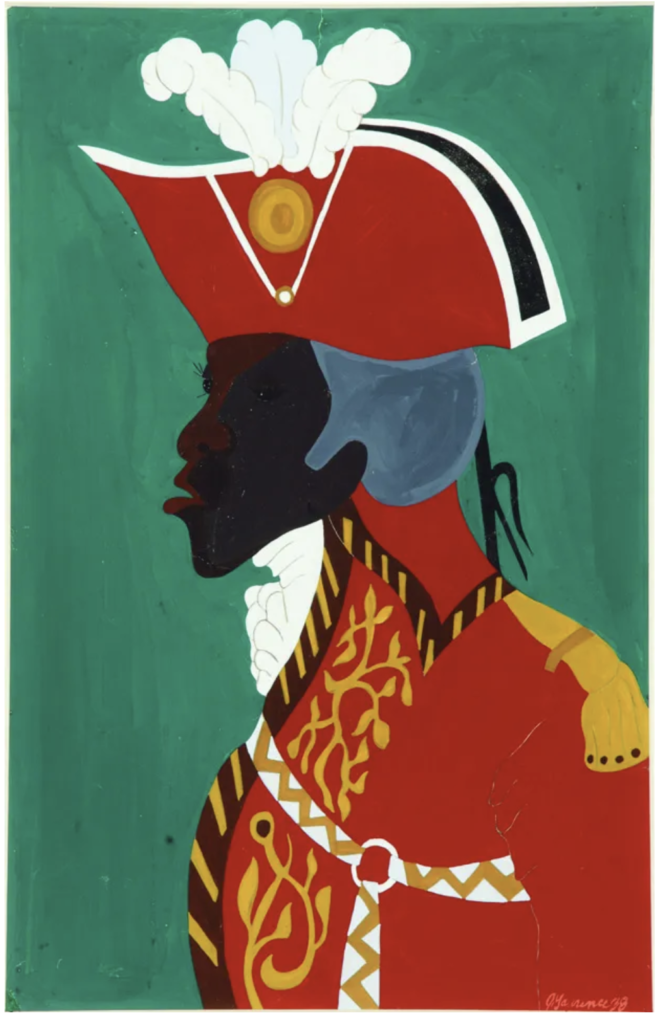
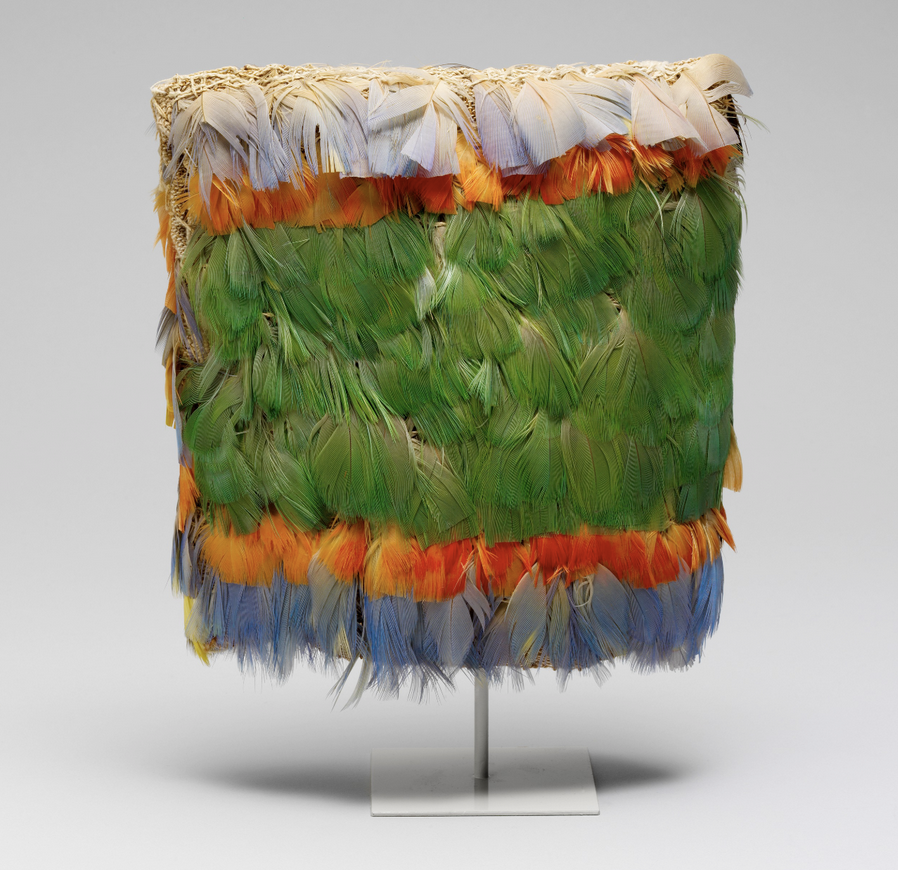
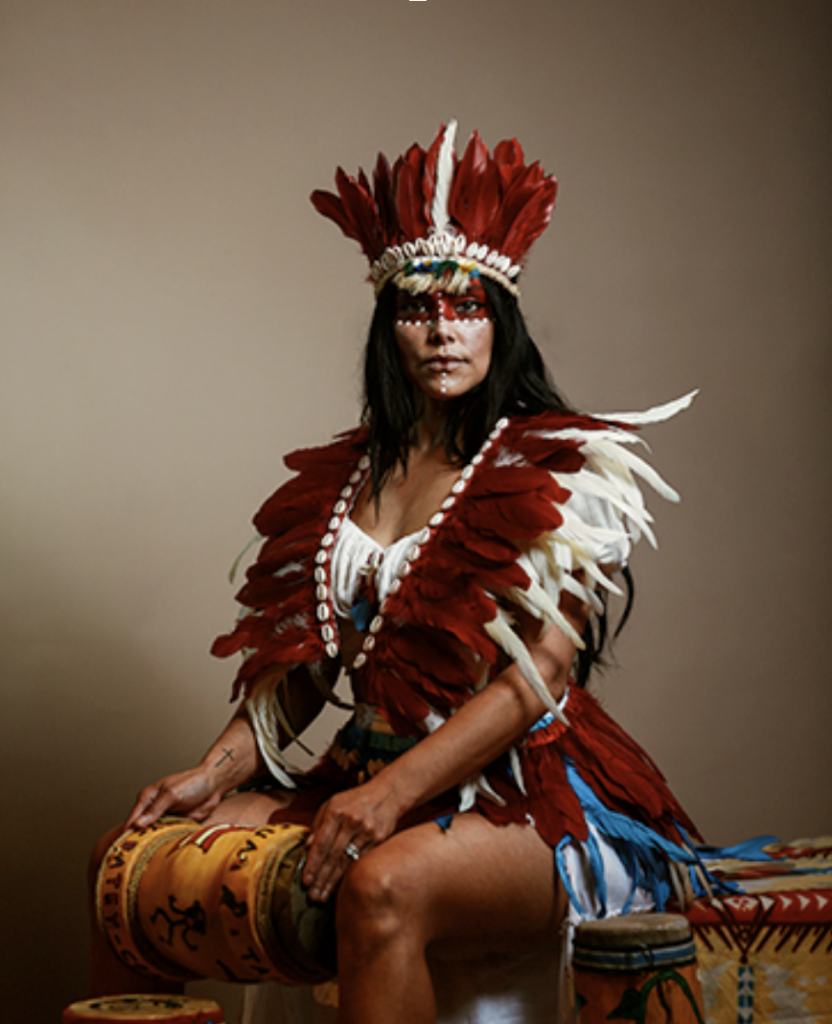
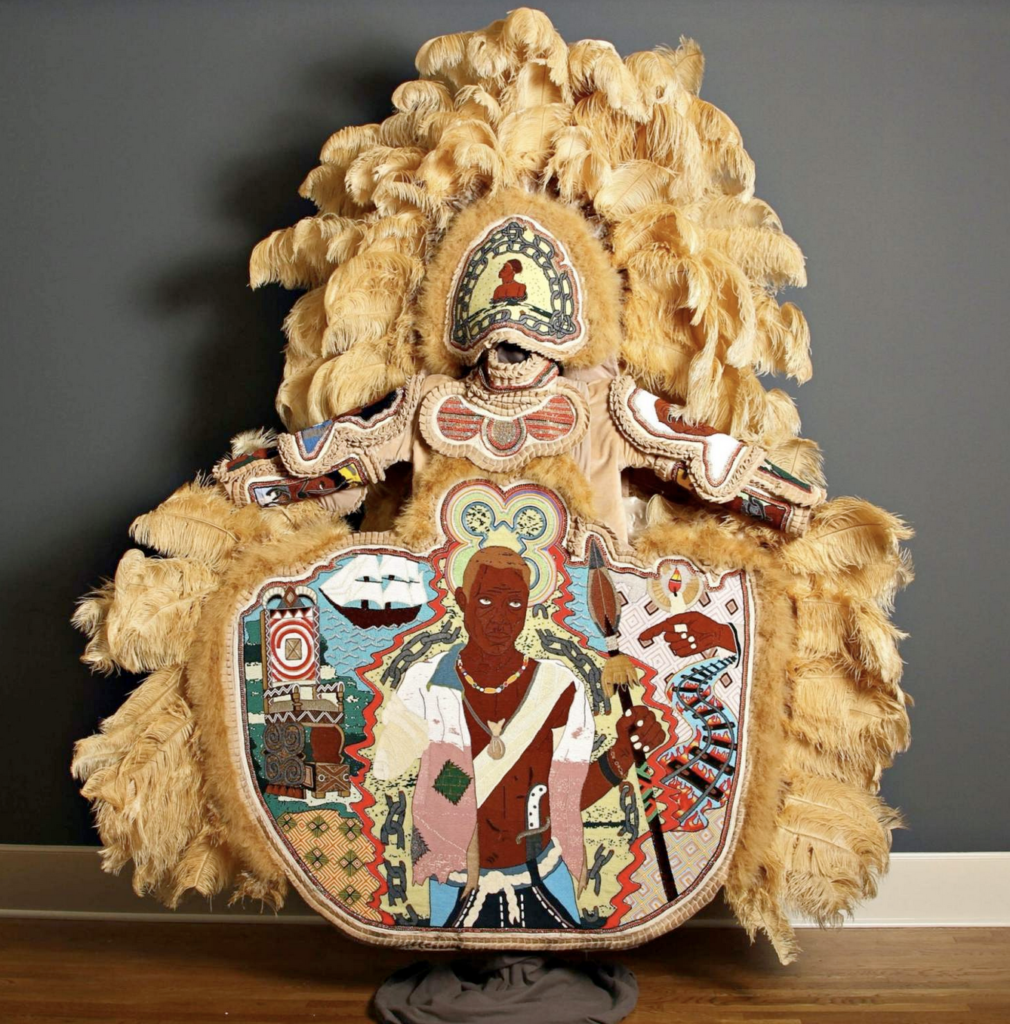
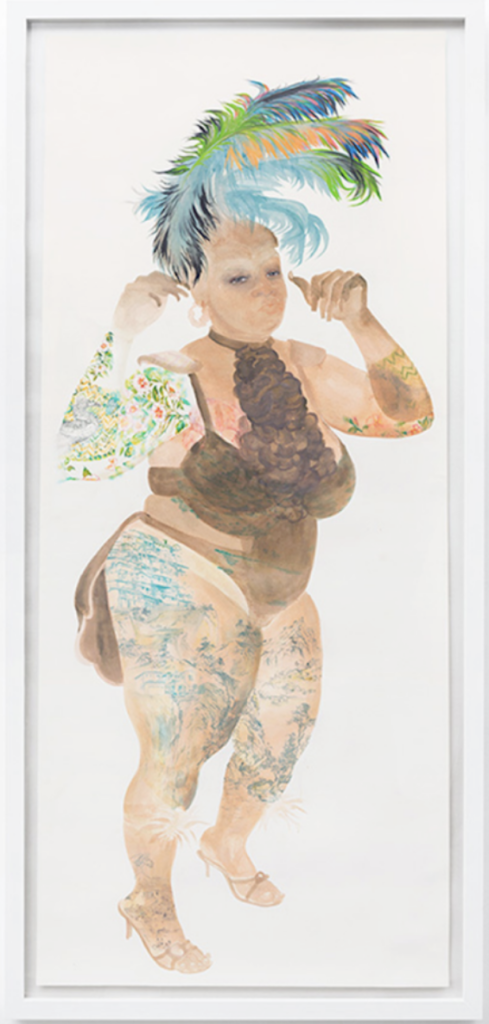
Feathers: Flights of Freedom across the Américas is a proposed exhibition exploring how contemporary Latin American, Caribbean, Latinx, and New Orleans-based artists use feathers to evoke resistance, reclamation, and freedom. Bringing together photography, painting, textile-based work, installation, and ceremonial adornment, the exhibition places contemporary works such as André L. Wright Jr.’s photograph of India Colón Diaz, Firelei Báez’s Anayansi (2010), Demond Melancon’s Mardi Gras Indian suit Bras-Coupé (2016), and Bernardo Oyarzún’s installation Birds on the Head (2022) in dialogue with earlier works including Lenore Tawney’s Hanging, Mourning Dove (1962), Wifredo Lam’s Arbre de Plumes (1974), Jacob Lawrence’s General Toussaint L’Ouverture (1986), and pre-Columbian featherwork traditions. The exhibition argues that feathers are not just decorative, but carriers of spiritual, political, and cultural meaning across the Américas. By connecting Indigenous and Afro-diasporic cultures across Latin America, Central and South America, as well as Haiti and New Orleans, the project considers how feathered forms reactivate ways of seeing and knowing that colonialism attempted to erase. Research questions include: What do feathers signify across the cultural heritage of the Américas? How do contemporary artists reclaim Indigenous and Afro-diasporic memory through feathered imagery and materiality? How do birds and flight become metaphors for survival, movement, and liberation? What kinds of knowledge, power, and memory do feathers carry across the Américas, and how have colonial frameworks obscured those meanings? How did colonial uses of feathers differ from Indigenous and Afro-diasporic understandings of their ceremonial, visual, and epistemic significance?

This entry is licensed under a Creative Commons Attribution-NonCommercial-ShareAlike 4.0 International license.

